Why Thanisandra Main Road Is North Bangalore's Fastest-Growing Address
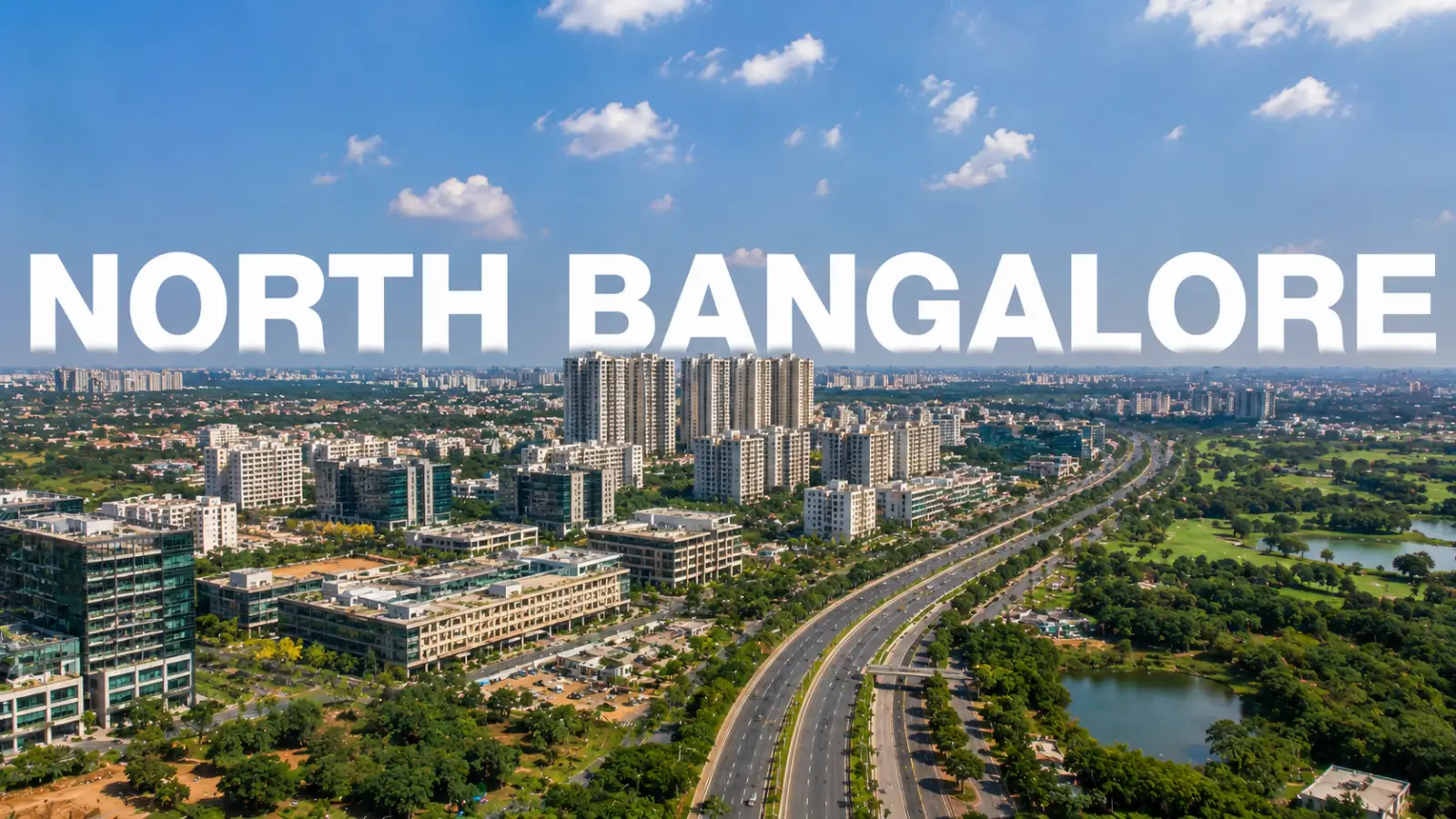
A road that once served as a connector now carries one of the city's busiest housing corridors. Thanisandra main road real estate growth has tracked...
A road that once served as a connector now carries one of the city's busiest housing corridors. Thanisandra main road real estate growth has tracked three forces in sequence: office absorption to the south, airport-linked development to the north, and a steady pipeline of branded residential supply in between.
What the Numbers Show
Indicator | Figure |
|---|---|
One-year price movement | 10.0% – 11.4% |
Three-year price movement | 56.5% – 57.7% |
Five-year price movement | 90.1% – 94.2% |
Ten-year price movement | 139.6% – 144.8% |
Land-rate movement, one year / ten years | 41.7% / 240.0% |
Branded projects on the corridor | ~Rs 13,000 – Rs 16,000 per sft |
Land rates rising faster than apartment rates is the detail worth noticing. It usually signals that developers expect demand to continue, and it tends to show up in launch pricing a year or two later.
The Office Belt to the South
Employment drives housing in every Indian city, and this corridor sits close to a large share of North Bengaluru's office stock. Manyata Embassy Business Park lies about 7.5 km from the northern stretch of the road, Karle Town Centre SEZ and the Hebbal office cluster fall around 8.5 km, and Bhartiya City sits roughly 3 km away. Kirloskar Business Park at Hebbal is about 12 km out. Workers in all of them can live on this road and reach an office without crossing the city.
The Airport Corridor to the North
Travel the other way and the road feeds Kogilu, Yelahanka and the airport belt, with Kempegowda International Airport roughly 21 km by road. KIADB Aerospace and IT Park at Bagalur, about 18 km away, adds aerospace and logistics employment to the mix. Households that fly often, and professionals working along the airport belt, treat this direction as the more valuable one.
Roads and Metro
Three routes carry most movement: Thanisandra Main Road itself, the Outer Ring Road reached through the junction near Nagawara at about 9.3 km, and Hennur–Bagalur Road heading east. Metro work runs on both flanks, with the Pink Line terminating at Nagawara roughly 10.7 km south and the Blue Line airport corridor passing Jakkur Cross about 9 km west. Commissioning dates sit with the transport authorities, so treat them as improvements in progress rather than as current amenities.
Everyday Thanisandra Locality Advantages
Infrastructure here arrived with the housing rather than after it, which shortens the wait new corridors usually impose. Thanisandra locality advantages include international schools within 8–14 km at Yelahanka, Jakkur, Sahakar Nagar and Tarahunise, REVA University about 3 km up the road, tertiary hospitals such as Cytecare, Aster CMI and Manipal Hebbal within 11 km, and retail from Bhartiya Mall at roughly 3 km through Elements, Galleria and Phoenix Mall of Asia within 9 km.
What Living Here Is Actually Like
Honest assessment includes the friction. Living on thanisandra main road means a comfortable run north and a slow one south between eight and ten in the morning, particularly approaching the Outer Ring Road junction. Weekend travel is easy in both directions. Anyone considering the corridor should drive their own commute at their own hour before deciding, because no amount of planning inside a project changes the road outside it.
Who Is Buying Here
Three buyer groups dominate the corridor. Technology and multinational staff working at Manyata, Bhartiya City and the Hebbal cluster form the largest, drawn by a commute that stays on one road. Families upgrading from smaller homes closer to the city make up the second, since the same budget buys more floor area here. Investors and overseas buyers form the third, attracted by rental demand from the first two groups and by the documented price record. Thanisandra main road real estate growth has been steady partly because those three sources of demand rarely weaken at the same time.
Supply and Price Discovery
Several listed developers hold delivered or active projects along this stretch, which gives buyers something many micro-markets lack: recorded transactions to price against and a resale market with real volume. That depth also keeps rental pricing transparent, with homes from A-class developers taken at 3.5% to 4% of property cost each year semi-furnished and 4% to 4.5% furnished.
Where the Corridor Goes Next
Three things will decide the next phase of thanisandra main road real estate growth: how quickly the metro lines commission, how much further office absorption runs at Manyata and Bhartiya City, and whether road upgrades keep pace with the housing already approved. Watch those rather than launch advertising, and the corridor's direction becomes fairly easy to read.
Ask about projects on this corridor — Enquire Now
Related reading: Is Thanisandra a Good Place to Live? A Locality Guide.
FAQs
What is driving real estate growth on Thanisandra Main Road?
Office absorption at Manyata, Bhartiya City and the Hebbal cluster to the south, airport-linked development to the north, and a steady pipeline of branded residential supply along the corridor.How much have prices moved here?
Roughly 10.0% to 11.4% over one year, about 56.5% to 57.7% across three years, and 90.1% to 94.2% over five years, with land rates on the corridor rising faster than apartment rates.What is the main drawback of living on this road?
Southbound traffic between eight and ten in the morning, particularly approaching the Outer Ring Road junction near Nagawara at about 9.3 km.
Related Articles
Global Capability Centres and Their Impact on Bangalore Housing
Captive centres changed the profile of the city's office demand, and housing followed. The gcc impact on bangalore real estate is easiest to see in...
KIADB Aerospace Park and the North Bangalore Industrial Corridor
Industrial employment shapes housing demand differently from office employment, and northern Bengaluru now carries both. The kiadb aerospace park...
What's Driving Bangalore's Real Estate Growth in 2026?
City-level narratives explain less than corridor-level numbers, which is why any answer to what is driving bangalore real estate growth in 2026...
Bangalore's Startup Scene and Premium Housing Demand
Wealth created by young companies eventually buys property, and Bengaluru has produced more of it than any other Indian city. The startup growth...